
Maths
Intent
"Mathematics is a creative and highly inter-connected discipline that has been developed over centuries, providing the solution to some of history’s most intriguing problems. It is essential to everyday life, critical to science, technology and engineering, and necessary for financial literacy and most forms of employment. A high-quality mathematics education therefore provides a foundation for understanding the world, the ability to reason mathematically, an appreciation of the beauty and power of mathematics, and a sense of enjoyment and curiosity about the subject." - National curriculum 2014
Our intent is to deliver an inclusive, ambitious Mathematics curriculum that meets the statutory requirements of the National Curriculum while fostering confidence, curiosity, and a love of problem-solving. We aim to provide meaningful, real-life contexts and cross-curricular opportunities that enable every child to think logically and creatively.
We strive to:
Teach Mathematics in carefully planned blocks to secure depth of learning.
Follow a mastery approach using small steps and structured sequences through Power Maths and White Rose schemes.
Develop fluency in times tables, number facts, and mathematical vocabulary.
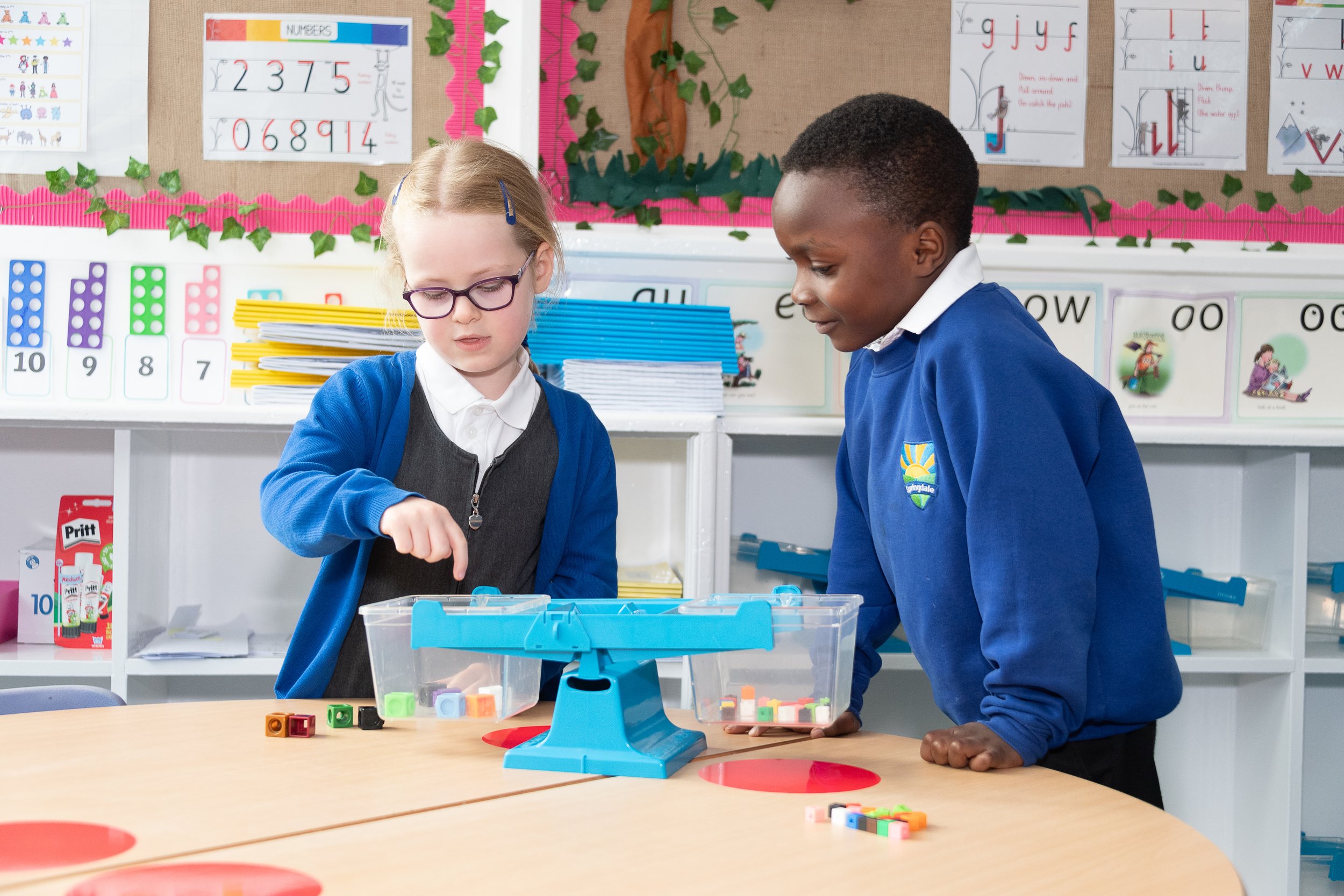
Use concrete, pictorial, and abstract representations to deepen understanding.
Encourage discussion, reasoning, and explanation of mathematical thinking.
Identify and address misconceptions quickly to ensure progress for all learners.
Implementation
Mathematics at Springdale is taught in blocks throughout the year to allow pupils to achieve depth in their learning. Teachers follow the mastery approach, using small-step sequences supported by Power Maths and White Rose schemes. Lessons include opportunities to develop fluency, recall times tables, reason mathematically, and solve problems in meaningful contexts.
We use the CPA (Concrete–Pictorial–Abstract) approach to secure understanding:
Concrete – practical resources to explore key concepts such as subitising, place value, and partitioning.
Pictorial – visual representations to deepen understanding of number and relationships.
Abstract – linking concepts to numbers and operations in calculations.
Assessment is ongoing and embedded within lessons. Pupils demonstrate understanding through problem-solving and by explaining their reasoning using precise mathematical language. Misconceptions are identified and addressed promptly to ensure progress.
Impact
Our approach ensures pupils develop secure knowledge and confidence in Mathematics. They can apply skills to solve problems, reason logically, and explain their thinking clearly. Pupils understand not only the answers but the steps and strategies behind them, embedding deep conceptual understanding. By the end of each key stage, pupils have a deep understanding of mathematical concepts and are prepared for the next stage of education.
Through the CPA approach (Concrete–Pictorial–Abstract), children build strong foundations in number, place value, and operations, enabling them to make connections and progress to abstract reasoning. Misconceptions are identified and addressed quickly, ensuring that learning is secure and gaps are closed. By the end of each key stage, pupils demonstrate fluency, flexibility, and resilience in problem-solving. They are well-prepared for the next stage of education and equipped with the mathematical skills needed for everyday life and future employment.
We measure impact through:
Regular formative and summative assessments.
Pupil voice and evidence of reasoning in books.
Monitoring progress against age-related expectations.
Ultimately, our Mathematics curriculum equips pupils with the skills and understanding they need for everyday life and future learning.





Maths
Intent
"Mathematics is a creative and highly inter-connected discipline that has been developed over centuries, providing the solution to some of history’s most intriguing problems. It is essential to everyday life, critical to science, technology and engineering, and necessary for financial literacy and most forms of employment. A high-quality mathematics education therefore provides a foundation for understanding the world, the ability to reason mathematically, an appreciation of the beauty and power of mathematics, and a sense of enjoyment and curiosity about the subject." - National curriculum 2014
At Springdale we see Maths as a multi-discipline, cross curricular subject which develops vital, logical reasoning strategies. Mathematics pervades all aspects of our children’s world, enabling them to calculate, reason and solve problems in order to make sense of. it. Developing an understanding of pattern in both number and space is vital to their everyday lives. Through their growing knowledge our children will appreciate the contribution made by many cultures to the development and application of mathematics. We view Mathematics as a creative and interconnected subject essential to everyday life, science, technology and engineering. We want our children to see Mathematics as being relevant to their world and applicable to everyday life, as well as being something that they will need as they move on through their school life and ultimately to the world of employment. Through our teaching we aim to promote the secure knowledge of skills to develop an understanding of mathematics in a context which provides purpose and meaning. The discussion about maths between talk partners, identifying learning errors and explanations of mathematical thinking, is essential to develop understanding. The process by which they achieved their answer is just as important as the answer itself. Our Maths curriculum promotes the children’s ability to think mathematically, which allows them to understand their learning by breaking it down into a series of manageable steps and embeds their skills through intelligent, progressive practice.
Implementation
Mathematics at Springdale is taught in blocks throughout the year, so that children can achieve depth in their learning. Teachers follow the mastery approach and a small step, structured sequence of planning using Power Maths supported by White Rose primary schemes of learning. During each lesson, there are opportunities for the children to develop their times tables knowledge, number fluency, solve problems, reason mathematically and extend their mathematical vocabulary, but the starting point is always understanding and confidence. Learning is assessed through problem solving opportunities in which they are required to justify and explain their learning using appropriate mathematical language and connected steps. Misconceptions, which hinder learning progress, are identified and addressed quickly. Through the use of concrete (practical resoureces) resources, the key concepts of subitising, place value and partitioning are secured. The pupils’ understanding is extended through relating the ‘concrete’ stage to the ‘pictorial’ step. Through the use of pictures and visual representations, the pupils develop a deep understanding of number and mathematical concepts. The ‘abstract’ stage involves relating this to numbers and mathematical operations in which the concrete along with the pictorial representations relates to the numbers we see in calculations.
Impact
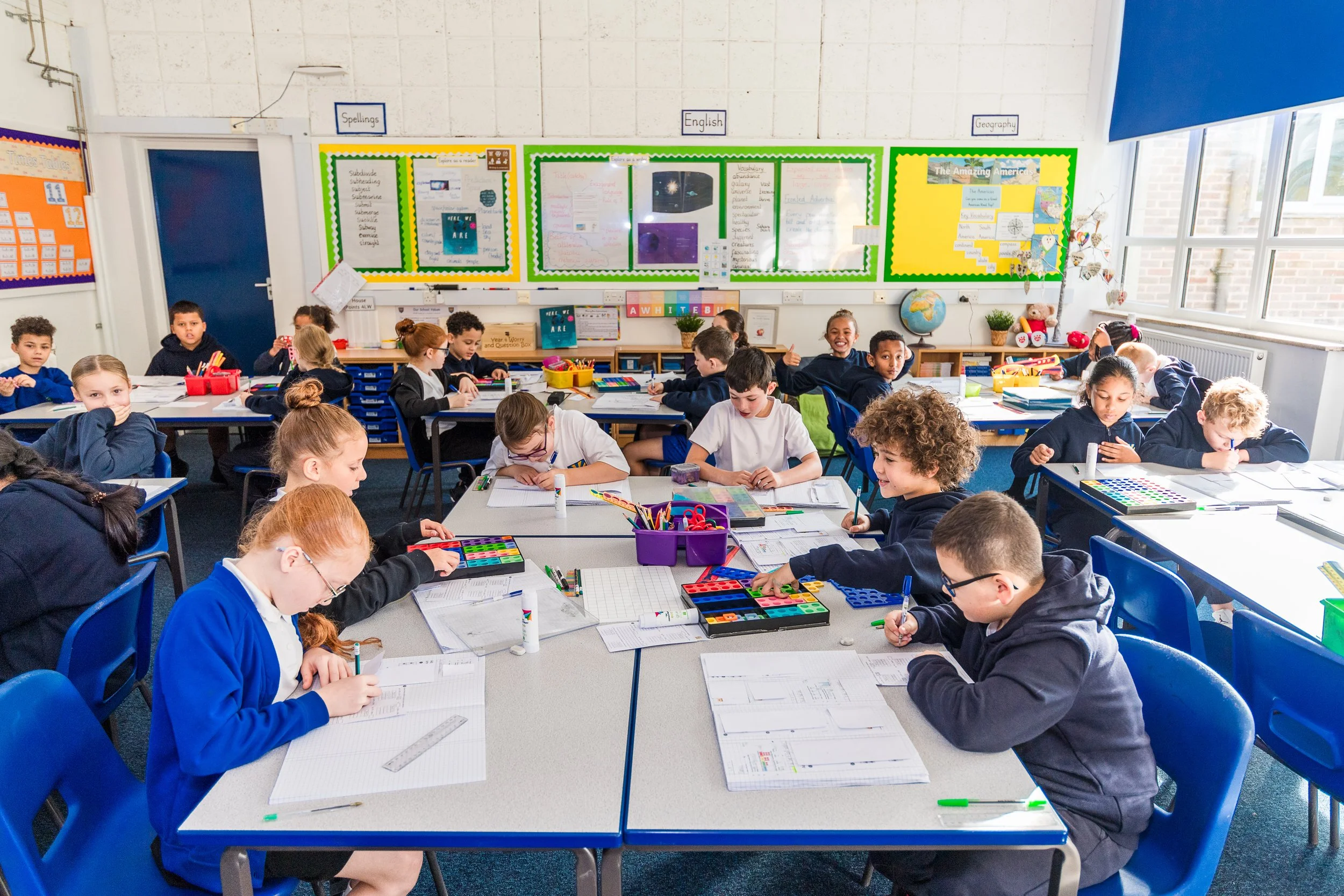
At Springdale, one of our principal aims is to develop children’s knowledge, skills and understanding from a point of security and confidence- ‘I know this, so I am ready for the next learning step’. During our daily lessons, the children are encouraged to ask, as well as answer mathematical questions, using the correct mathematical vocabulary. They have the opportunity to use a wide range ofconcrete resources to support their learning, such as number lines, number squares, digit cards, place value charts and counters, base ten, Numicon and rekenreks. ICT is used to support number skills on TT Rockstars, Number Gym and supports learning where appropriate. From a strong foundation of understanding– even when an unfamiliar representation is used- we teach the children to apply their learning to everyday situations, make connections, give evidence and think deeply. Children will have embedded transferable skills which will enhance their understanding across the wider curriculum and support future learning.
